Guest Post: Nyxie’s Nook
No matter how far we’ve come, we can always find new ways to improve our mental
health. For many it’s letting bad habits go, but what about the many good habits we
could start? Let’s dive into habits to improve mental health to help you set up good mental health habits.
Get into a better sleep routine.

Do not, under any circumstances, chronically neglect your sleeping pattern. The state of our mental, physical, and even emotional health can all be linked back to our sleep hygiene. If you neglect to get enough sleep, then you don’t get the chance to rest and recover from everyday life. Being chronically sleep deprived makes it harder to cope with emotional stressors, regulate emotions and make good decisions. And if you already suffer from any pre-existing mental health issues, sleep deprivation can amplify symptoms ten-fold.
Sadly a good sleep schedule is something that is made more and more difficult as we
progress in life. Between shift work, raising young children, and even environmental
factors, more of us are sleep deprived than ever before. But there are several simple
ways you can work towards better sleep hygiene. Here are some awesome essential oil blends to help you get a good night’s sleep! Have a look at this post to learn more.
Habits to improve mental health keep a journal.
Journaling is top of many people’s lists as a way to cope with stress, anxiety, and
other mental health concerns. But it’s also a great tool if your mind is perfectly
healthy (lucky you).

In fact, according to some studies, Journalling for just fifteen minutes has been known to reduce both stress and anxiety! And, better yet, there’s no ‘correct’ way to do it. You simply pick up a book or a piece of paper and write down what’s bothering you. Use your page to talk about what’s stressing you out, and how you’re feeling, or use it to write a list of profanities about your current situation.
In months and even years to come you can look back on what you’ve written and use it to see how far you’ve come. Or, if nothing else, it might serve as a good laugh. Check out these 25 Positive Health Affirmations if you’re looking for a starting place!
Get in some exercise.
There is a range of benefits to adding exercise to our daily routine, and these can
positively impact both our mental and physical health. Taking part in regular exercise
not only releases endorphins (those feel-good chemicals) but also leads to a boost in
self-confidence and lowers our stress levels. Not to mention fresh air and exercise keeps our bodies healthy and improve our mental health as a whole!
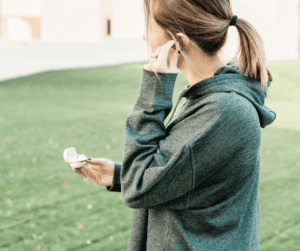
But don’t jump straight from the couch to a five-kilometer run! Take it slowly and start with gentle exercises such as yoga or a brisk walk around the block. If you struggle with the motivation to maintain exercise, then find a routine that works for you. I personally hate going to the gym but find it easier to lift my home weights or lay out my yoga mat in front of the TV. I stay warm, can watch my shows, and get in a workout all without leaving my house! Are you a fan of at-home stretches like me, if so here are some simple ideas to help spark some ideas for you. Talk about simple healthy habits that are fun activities to improve mental health.
If walking is more your thing, why not look for a local walking group or buddy up? Or
download your favourite podcast and hit the road!
Save more!
Christmas is over and the majority of us made it through January by the skin of our
teeth. But now is the best time to start putting away any extra money you have for a
rainy day. If you’re lucky enough to have some extra cash at the end of the month,
that is.

If you have the means to save, then it’s time to sit down and figure out what it is you’re saving for. Are you planning on an all-inclusive vacation? Do you want to pay off your mortgage sooner? Or maybe you’re getting married and have your eye on a special dress. It doesn’t matter what it is, what matters is that you start getting into
the routine of saving.
Once you have your goal in mind, it’s time to find a budget planner that’s right for you. I personally use a self-made Excel sheet where I log all of our financial income and outgoings. From there, we’re able to see exactly what we’re spending and we’re better able to assess if necessities really are all that essential. You’d be surprised how many subscriptions you find that you either don’t need or didn’t even know you were paying for.
You don’t necessarily have to visit this tracker every week, or even every month.
Only when significant changes arise such as a change in income, a hike in prices, or a
new saving goal. Not only will this have a positive impact on your finances, but also on your mental health!
Habits to improve mental health spend more time in the sunlight!
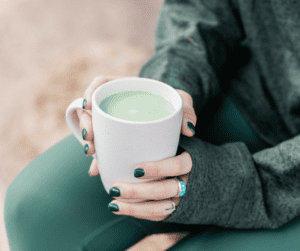
Lack of exposure to natural lighting is known for causing a disruption to our circadian rhythms, which later results in a variety of other physical and mental illnesses. It has such an important role to play in our overall health and well-being, yet sunlight is so often overlooked. But as we move out of another dark and miserable winter, we’re reminded of how sunlight brings out the best in us.
Think about it. When spring arrives and the sun finally appears, we generally begin to
feel better. We’re often filled with newfound energy, productivity, and the motivation
to go out and do something! In the winter, however, the opposite is evident. In the latter months of the year when the sun sets in the early afternoon, it leaves us with very little else but artificial light to guide our way. Our moods naturally take a slump during this time largely due to the absence of adequate natural lighting. This is when you can expect to see an increase in symptoms of depression, anxiety, and SAD (Seasonal Affective Disorder).
Celebrate all your wins, no matter how small.

It can be easy to overlook all the small successes in life. We celebrate the bigger things so publicly, like marriages, graduations, and new jobs. But what about those wins that no one talks about? Today I got out of bed and started writing when I wanted nothing more than to hide because of my anxiety. I made a coffee, cleaned the cat’s litter trays, and worked through emails. Even these small everyday things felt like dragging nails down a chalkboard. But I did them.
Maybe you started a new hobby, or you bought weights online to start your new
workout routine. Or, like me, maybe you simply got out of bed to tend to your
animals or to get a glass of water when your mental health is hitting rock bottom.
Celebrate these wins to help create a healthy mind. Say ‘well done’ and allow yourself to feel proud. It isn’t all about the big wins in life, sometimes we need to celebrate the small ones too.
Habits to improve mental health practice daily gratitude.
Looking for habits to improve mental health well let me introduce you to gratitude. We’ve all heard of the term gratitude, even if it’s just in passing. It’s become a well-
known buzzword of the twenty-first century alongside self-care and work-life
balance. But what does gratitude mean and how can you begin to practice it on a
daily basis?

Gratitude is a fairly basic concept and involves giving thanks or appreciation for what we have and receive in life. It can be hard to see the sky for the trees when times get rough. We get stuck in a loop of self-pity and often can feel like the whole world is against us. But practicing gratitude gives us the opportunity to see the good in our lives, whether it’s the people we love, a quiet walk in nature, or, simply, a good cup of coffee.
When I first started dabbling with gratitude I was in a very dark place in my life. I felt
stupid writing down the same things over and over. But I continued to get up every
morning and write down three things I was grateful for at that moment. Slowly this
became second nature and now, instead of writing them down, I think about them
every day. I’m so grateful for the love I have, my two beautiful cats and, of course, having a roof over my head. Three simple things, but massive when you look at the bigger picture.
Monitor your social media intake.
For a long time now there’s been a debate surrounding social media and the impact
it has on both society and our overall mental health. We are constantly hearing
stories about children as young as six being subjected to bullying, or even becoming
addicted to social media. But despite its many pros and cons, it is possible to
experience too much of something.
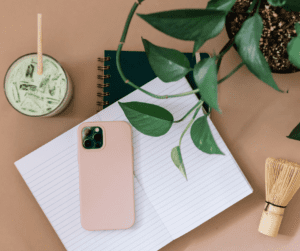
Think about it, we’re always attached to our mobile phones. That little device may keep us in contact with loved ones, but it also gives us instant access to the world too. For many of us, the hours spent scrolling through social media can seriously impact our self-image, and therefore our mental health. In fact, constant social media use has been directly linked to increased anxiety, depression, and a reduction
in self-confidence. This doesn’t help your mental wellness and can have a negative impact on positive mental health.
While you can use social media mindfully and in a way that doesn’t deplete your
mental health, it may also be good to consider a break. Whether it’s a day, week, or
longer, taking time away from social media can help us reconnect with ourselves and
the world that’s directly in front of us.
Ways to monitor your social media intake
● Put a time limit on how long you can spend on social media a day. There are
some apps you can use to do this, or some phones even come pre-loaded with
screen time monitoring.
● Be careful not to start or end your day with social media. For many of us
reaching for the phone is the first thing we do before we get up. Put your
phone somewhere out of reach and instead reach for a water bottle. Having
your phone out of sight is also a great way to set an alarm, meaning you have
to get up to turn it off.
–
What other habits can you start to boost and improve mental health? Looking for some simple ways – check out these self-care checklist items!
Thank you so much to Nyxie’s Nook for this awesome guest post!

[…] journey that self-care to reduce stress was going to be a foundational piece of my health. Your mental health and physical health are deeply connected, and at times that can be forgotten in our health […]